Know Your Garden Birds
Whistler have a concise, consumer-friendly guide to allow you to “Know Your Garden Birds”.
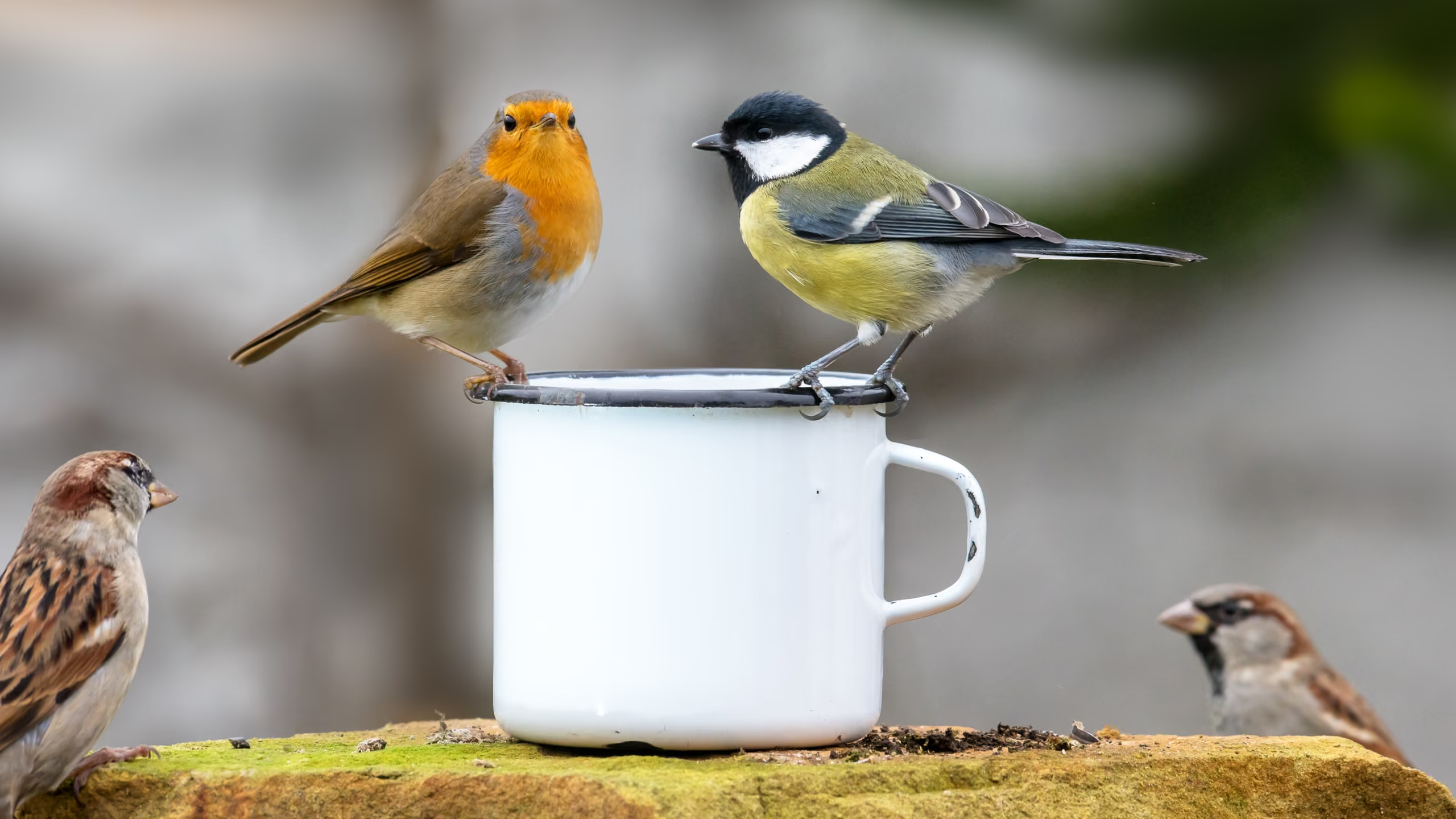
ROBIN
One of Britain’s most recognisable garden birds, the robin is famous for its bright orange-red breast and curious nature. It enjoys insects, worms, mealworms and soft foods.
Fun Fact: Robins are highly territorial and both males and females can sing during winter.
BLUE TIT
Small, colourful and acrobatic, blue tits are frequent visitors to hanging feeders, enjoying sunflower hearts, peanuts and suet.
Fun Fact: A breeding pair may make hundreds of feeding trips a day when raising hungry chicks.
SONG THRUSH
Recognisable by its warm brown back and spotted breast, the song thrush searches lawns and borders for worms, insects and snails.
Fun Fact: It famously uses a favourite stone as an “anvil” to smash open snail shells.
GREAT TIT
The largest of the common UK tits, with a black head, white cheeks and distinctive black stripe down its yellow breast. It readily visits feeders for seeds, nuts and suet.
Fun Fact: Its familiar two-note call is often described as sounding like “teacher-teacher”.
GOLDFINCH
With its red face and flashes of bright yellow on its wings, the goldfinch is one of our most colourful garden visitors. It particularly enjoys small seeds and sunflower hearts.
Fun Fact: Its long, fine beak is perfectly adapted for extracting tiny seeds from plants such as teasels.
GREENFINCH
A chunky finch with olive-green plumage and striking yellow wing flashes, greenfinches enjoy sunflower seeds and other seed-rich foods.
Fun Fact: Their distinctive song includes a long, nasal “wheeze” that can make them surprisingly easy to identify by sound.
HOUSE SPARROW
Sociable, noisy and full of character, house sparrows often visit gardens in groups and enjoy seeds, grains and insects.
Fun Fact: Unlike many garden birds, house sparrows love company and commonly nest close together in loose colonies.
BLACKBIRD
A familiar lawn visitor, blackbirds search for worms, insects and fallen fruit. Adult males are unmistakable with their black plumage and bright orange-yellow bill.
Fun Fact: Blackbirds have one of Britain's most beautiful garden songs, with individual males developing their own distinctive phrases.
WOOD PIGEON
Britain's largest and one of its most familiar garden pigeons, the wood pigeon has a pinkish breast and distinctive white neck patch. It feeds on seeds, grains and plant material.
Fun Fact: Despite their rather bulky appearance, wood pigeons are powerful fliers and can reach surprisingly high speeds.